How to Find a Reputable Moving Company in 4 Steps

Here’s the quick answer: To find a reputable moving company, confirm its USDOT number and household goods authority with the FMCSA, check its complaint history, read independent reviews, and make sure it runs a real business with a physical address. Then compare at least three written estimates based on an inspection of your belongings. moveBuddha has reviewed 4,500+ moving companies, and this four-step background check is the same process we use, or you can start with our list of the best interstate moving companies.




 rating

 4.23 / 5


- Specialty packing services
- White-glove reputation
- 80+ years' experience

Jump to the reputable mover info you’re looking for:
Quick note: If you’re moving locally within one state, skip to step 3 after checking your state’s licensing rules for movers.
Step 1: How to check a reputable moving company’s license and insurance

The Federal Motor Carrier Safety Administration (FMCSA) requires every mover that crosses state lines to register with the federal government and hold a U.S. DOT number. That makes the license check the fastest way to rule out bogus companies when you’re moving out of state.
A license doesn’t make a mover good, but a missing one is an instant dealbreaker. Licensed interstate movers have a USDOT number and usually a Motor Carrier (MC) number, and you’ll need one of them to run the check.
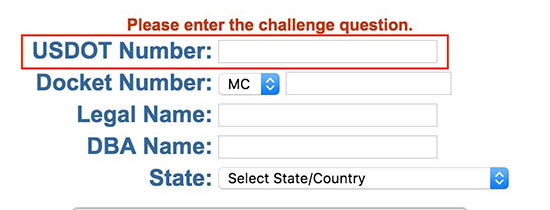
Most movers list their USDOT or MC number on the estimate paperwork and in their website’s footer or “About Us” page. Enter it in the FMCSA’s mover search, or in its Licensing and Insurance database for insurance details.
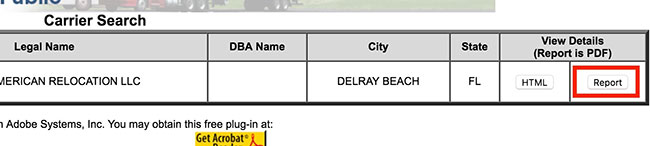
In the Licensing and Insurance database, click the report button to pull up the company’s full record.
Start by making sure you have the right company. Scam movers sometimes borrow another company’s DOT number, so confirm the company name, phone number, and address match what’s on your paperwork.
Many movers use a “doing business as” (DBA) name that’s different from their legal name. That’s normal, as long as one of the two matches the company you were quoted by.
Next, check that the license is current. The authority status should read active, and household goods should be marked yes. An inactive or “not authorized” status means the company can’t legally handle your interstate move, even if it was licensed in the past.
Moving within one state? The FMCSA doesn’t license intrastate movers, so check with your state’s transportation department or public utilities commission instead.
Side note: If a company only has broker authority (pictured below), it isn’t the actual moving company. It’s a middleman that sells your move to a carrier, and moveBuddha doesn’t recommend working with brokers. Learn more about moving brokers.

Why moveBuddha:
- On average, moveBuddha users save more than 30% by comparing movers before booking.
- When you choose a moveBuddha Certified mover, you get $1,000 in added move coverage, plus dedicated support throughout your move.
- If something goes wrong, moveBuddha provides dispute mediation with Certified movers to help resolve the issue and protect your move.
Step 2: How to check a moving company’s complaint history
Once you know a mover is operating legally, the next question is whether it’s any good. The FMCSA tracks complaints against interstate moving companies, and anyone can look them up.
Enter the mover’s USDOT or MC number in the FMCSA’s household goods complaint database to see a breakdown of recent complaints.
A few complaints aren’t necessarily a bad sign. The screenshot below is for a major van line that handles thousands of moves a year, so fewer than 30 complaints a year is a solid record.
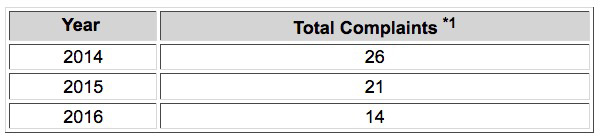
To judge whether a complaint count is high, compare it to the company’s fleet size, listed near the top right of the record. A company this large is guaranteed to collect some complaints.
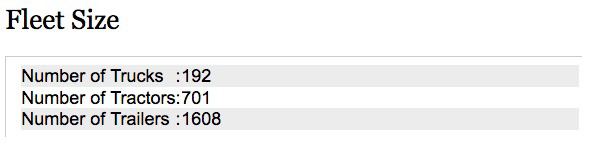
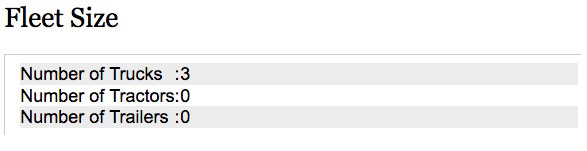
Now look at the opposite case. This is the fleet size of a small mover with a bad reputation:
And here are its complaints:
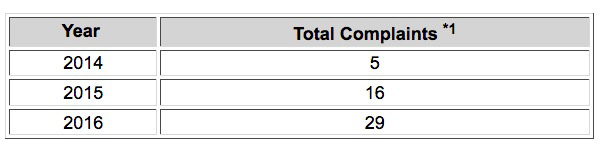
That many complaints against such a small fleet is a very bad sign. Scroll down and it gets worse.
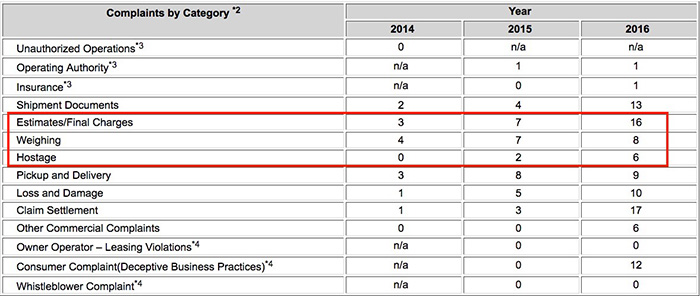
This company has a history of charging customers more at delivery and holding belongings hostage. It’s one to avoid, and you can see more warning signs in our guide to the worst moving companies.
Step 3: How to check reviews of a reputable moving company
If a company has an active license and a clean complaint record, you’re probably looking at a decent mover. Reviews tell you whether it’s a great one, since many problems never reach the FMCSA.
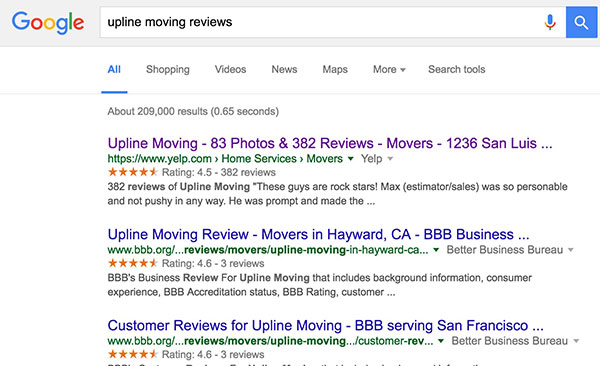
A quick Google search pulls up reviews from several sites, and the Better Business Bureau shows a company’s rating and complaint history. Keep these tips in mind as you read:
- Watch for lead-generation sites: Some “review” sites are run by brokers or lead sellers and push whichever movers pay them. Stick to independent review platforms and the BBB.
- Look for long-distance reviews: Out-of-state moves are far more complicated than local ones. Make sure the glowing reviews aren’t all for moves down the block.
- Spot fake reviews: Shady movers flood review sites with fake praise to drown out complaints. Lots of five-star reviews with similar wording are a warning sign.
- Be wary of few reviews: A mover that does a lot of business will have a healthy number of reviews on major sites. Very few reviews usually means trouble.
- Expect some bad reviews: Every legitimate mover gets complaints about late deliveries or damaged items. A perfect record is a red flag, not a selling point.
- Take price-hike complaints seriously: Reviews about big price jumps on moving day, or a mover refusing to deliver until you pay more, point to a scam.
- Find the local agent for van lines: National van lines like United, North American, and Mayflower work through local agents. Ask for the name of the agent handling your move and research that company too.
Step 4: How to confirm a reputable moving company runs a real business
The last step is arguably the most important. The best moving companies are run by people who care about their business, and it shows in clean trucks, uniformed crews, and responsive customer service.
That’s hard to measure before moving day, but a few checks help:
- Check professional memberships: Reputable movers often belong to state or national moving associations. See our list of moving company associations.
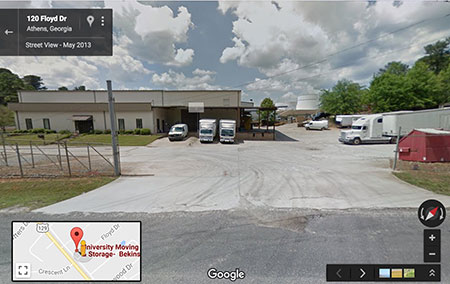
- Look up the address: Search the mover’s address on Google Maps Street View. A company doing long-distance moves should have a real warehouse and a place to park its trucks, not a mailbox or a vacant lot.
- Review its online presence: Reputable movers invest in a current website, active social media, and employees you can find on LinkedIn. A site with no local address or registration details is a red flag.
moveBuddha runs this vetting for you, too. Every moveBuddha Certified mover has already passed a review of its licensing, insurance, and service history.
How do you compare estimates from a reputable moving company?
A reputable moving company gives you a written estimate based on an inspection of your belongings, never a phone quote sight unseen. The FMCSA recommends getting written estimates from several movers, and we suggest at least three.
Pay attention to the estimate type. A binding estimate locks in your price, while a non-binding estimate can change with the actual weight of your shipment. Federal law caps what an interstate mover can collect at delivery on a non-binding estimate at 110% of the estimate. Our guide to binding vs. non-binding estimates explains the difference.
Don’t automatically take the lowest quote, either. A price far below the rest is a common scam tactic. To check whether a quote is realistic, compare it to moveBuddha’s Moving Cost Calculator, which runs on a monthly dataset of 1,000+ live price points, so you have a real benchmark instead of a single mover’s number.
Pro tip: Never pay a large deposit or pay in cash before your move, and never sign blank documents. Both are classic setups for the common moving scams we see most often.
What coverage should a reputable moving company offer?
Every interstate mover must offer two levels of liability, called valuation. Full Value Protection makes the mover responsible for the replacement value of anything lost or damaged, and it’s the default unless you sign to decline it.
Released Value costs nothing extra, but it caps the mover’s liability at 60 cents per pound per article. That means a 10-pound item worth $1,000 would get you just $6, according to the FMCSA’s valuation guide.
Neither option is actually insurance. Third-party moving insurance is a separate policy you buy on your own, and those policies are often limited in scope. We recommend working with your mover to get Full Value Protection instead.
What are the red flags of a disreputable moving company?
The FMCSA publishes a list of moving fraud red flags. Walk away if a mover does any of the following:
- Quotes sight unseen: The company gives a phone or online estimate without inspecting your belongings, or won’t put the estimate in writing.
- Demands cash or a big deposit: Reputable movers don’t ask for large payments before your move.
- Asks you to sign blank documents: Anything you sign should be filled out completely first.
- Skips the required paperwork: Interstate movers must give you the federal “Your Rights and Responsibilities When You Move” booklet.
- Claims everything is insured: Movers offer valuation coverage, not insurance, and a company that blurs the two isn’t being straight with you.
- Answers the phone generically: A company that answers with “Movers” instead of its business name may be a broker or a scam.
- Shows up in a rental truck: A reputable moving company arrives in its own marked truck.
- Raises the price after loading: A mover that claims you have more stuff than estimated can’t charge more without your signed agreement to a revised estimate.

A reputable moving company gives you a written estimate based on an inspection of your belongings, never a phone quote sight unseen.
FAQs about finding a reputable moving company
How do you find a reputable moving company?
To find a reputable moving company, verify its USDOT number and household goods authority with the FMCSA, then check its complaint history and independent reviews. Confirm it has a real address and marked trucks, and compare at least three written estimates.
How do I check if a moving company is licensed?
To check if a moving company is licensed, enter its USDOT or MC number in the FMCSA’s mover search or Licensing and Insurance database. The authority status should be active with household goods authorized. Local movers are licensed by their state instead.
How can I tell if a moving company is actually a broker?
You can tell a moving company is a broker if its FMCSA record shows only broker authority. Brokers don’t own trucks or perform moves. They sell your move to a separate carrier.
Should I choose the cheapest moving estimate?
You shouldn’t automatically choose the cheapest moving estimate. A quote far below the others is a common scam tactic, so compare written estimates and check each mover’s license and complaint history first.
What is the 110% rule for movers?
The 110% rule means an interstate mover can’t collect more than 110% of a non-binding estimate at delivery. You can be billed for any remaining charges after the move.
Is valuation coverage the same as moving insurance?
Valuation coverage isn’t the same as moving insurance. Valuation is the mover’s liability for lost or damaged items, while moving insurance is a separate third-party policy you buy on your own.
Ready to hire a reputable moving company?
Finding a reputable moving company takes a little homework, but a license check, complaint search, and a few reviews go a long way toward a smooth move. A good mover will walk you through the process, but it still pays to know your rights before moving day.
How we chose the best moving companies
The moveBuddha team has spent nearly 10 years evaluating moving companies using a rigorous review system to identify the best moving companies. Our thorough methodology evaluates each moving company's services, cost, customer service, and reputation:
Moving services (35%):
We verify operating authority, insurance, and service scope against FMCSA/SAFER and state databases. We confirm availability via standardized mystery-shopping calls (packing tiers, storage type, specialty handling, delivery windows, valuation), and then review contracts alongside complaint and claims patterns over time.
Customer feedback (28%):
We run structured post-move surveys through our Better Moves Project with verifiable documentation. We emphasize on-time performance, care of goods, and estimates’ accuracy, and we investigate outliers before they influence scores.
Online reviews (7%):
We aggregate ratings across multiple third-party sites to reduce platform bias, analyze overall trends and company response behavior, and discount obvious spam/fake signals such as sudden bursts, duplicate language, and low-history profiles.
State availability (12%):
We confirm USDOT numbers, broker vs. carrier status, and any required state permits, then score a state-by-state service matrix that accounts for coverage gaps, seasonal limits, and lane strength. We award additional credit for documented cross-border or specialty lanes.
Additional services (12%):
We verify whether add-ons are performed in-house or subcontracted, look for crew training/certifications for high-value or oversized items, count only documented offerings (tariffs, photos, written service descriptions) confirmed via mystery shopping, and reward robust pre-move planning (virtual surveys, itemized crating).
Quotes/Payment options (6%):
We test standardized move profiles to assess estimate type (binding, not-to-exceed, non-binding), line-item transparency, and disclosed surcharges, require clear written policies for deposits, refunds, and cancellations, and award points for secure, flexible payment methods and customer portals.
Not what you were looking for?
Check out other categories that can help you find the information you need!